
JudgmentFuture of work
The Tool Made Me Faster. I Had to Make Myself Better.
What three AI tools, two years of daily use, and several expensive mistakes actually taught me.
Matteo Gatta16 min read
I do not think of myself as an AI power user. That label suggests tricks, optimized prompts, shortcuts, and a kind of technological virtuosity I neither have nor particularly admire. What I do have is 25 years of experience in telecom and digital strategy, a high tolerance for experimentation, and a very low tolerance for hype.
Over the past two years, I have used three AI tools seriously: ChatGPT first, then Gemini, then Claude, which has now become my primary working environment. Each tool taught me something different. Not about artificial intelligence in the abstract, but about how I think, where I am lazy, where I move too fast, and what judgment really means when a machine can produce fluent output in seconds.
This is an honest account of that journey. No evangelism. No "AI changed my life" theatre. And no pretending the tools are magic, because they are not. But used well, they do something almost as uncomfortable: they expose the quality of the person using them. 1.
Three tools, three lessons
ChatGPT was my entry point. In the beginning, my use was transactional: give me a draft, give me a structure, give me an answer. That was useful, but not yet transformative. What ChatGPT taught me was iteration. The first answer is rarely good enough, but it is almost always good enough to react against. That is a major shift. AI reduces the cost of the first draft. It does not reduce the standard of the final one.
It also taught me to protect my voice. AI can make everyone sound the same: polished, balanced, competent, slightly bland. That may be useful for some corporate documents, but it is deadly for thought leadership. A voice is not decoration. It carries credibility, relationships, experience, and accountability. What I got wrong was moving too quickly from idea to output. A beautifully written answer to a poorly framed question is still a poor answer. AI can make premature thinking look mature, and that is dangerous.
I used Gemini less extensively, but with a clear sense of what it does well: factual coverage, structured comparison, clean synthesis, and broad knowledge retrieval. For research, frameworks, and sanity checks, it can be extremely useful. In one session, the phrase "technical intimacy" emerged — the idea that you must understand the logic of the tools you use well enough to govern their output. That phrase stayed with me.
At least in my use, Gemini has been more of an informer than a challenger. It helps me map a field. It is less often the tool that forces me to rethink my position. That distinction matters, because sometimes you need coverage and sometimes you need resistance. They are not the same thing.
Claude became my primary environment because of one thing: it pushes back well. The sessions I value most are not the ones that produced the cleanest documents. They are the ones that challenged a thesis I had already formed. The RCS versus WhatsApp analysis. The Proximus Global strategic options. The Timefold positioning question. I brought the view. The tool sharpened it.
That is where AI becomes most useful for me: not as a substitute for thinking, but as pressure applied to thinking. What I still get wrong is that I settle too early. Several conversations end at "solid" rather than "best." The tool would have gone further. I stopped. That is not a technology limitation. That is an operating discipline issue on my side.
What AI exposed about me
My strength is attitude. My weakness is discipline. I use AI broadly and seriously: strategy, governance, content, research, commercial work, board preparation, market analysis, and writing. I bring my own thesis and use the tool to sharpen it rather than generate it. That posture is right. I do not outsource judgment.
But I am still too intuitive. Each session often starts fresh. I have not yet designed enough repeatable workflows. I know how to have a strong AI conversation, but I do not always convert that into a systematic operating model. That is the gap. The best users of AI will not be those with the cleverest prompts. They will be those with the strongest operating discipline. They will know when to diverge, when to converge, when to verify, when to stop, and when to start again.
Ask the tool to be ruthless — and mean it
The default behavior of most AI tools is to be helpful, balanced, and encouraging. That is exactly what you do not want when you are testing an argument, preparing for a board discussion, or publishing something under your name. My most useful instruction has become simple: before you improve this, tell me what is wrong with it.
That instruction changes the interaction. It asks the tool to be specific, to flag factual claims it cannot verify with high confidence, to separate fact from inference from opinion, and to state its level of confidence. That last part matters more than most people realize. An AI that says "I am moderately confident, but this should be verified" is far more useful than one that presents a plausible guess as established fact.
The practical prompt is simple: "Before you rewrite this, critique it. What is weak? What is unclear? What would a skeptical but fair reader attack? Which claims need verification?" Most people ask AI to make things better. The more useful move is to ask it to make your weaknesses visible first.
Verification is where the real work starts
AI has collapsed the cost of sounding right. That does not mean it has reduced the cost of being right. When a single person uses AI, a mistake may remain local. When a team uses AI in parallel across different parts of the same deliverable, a mistake can travel silently. One flawed input becomes the foundation for five credible outputs. By the time the final document reaches the audience, the error has been formatted, cross-referenced, polished, and made authoritative.
That is how bad assumptions become expensive. The same risk exists inside a single workflow. A flawed market-size estimate becomes the basis for a revenue model. A misattributed quote becomes the anchor ofa strategic argument. A plausible causal claim becomes a board recommendation. At each step, the error gains confidence. By the final output, it is almost invisible.
The practical implication is simple: verify at the point of entry, not at the point of delivery. The question is not, "Does the final document look right?" The question is, "Do I actually know that the foundations are solid?" In high-stakes work, I now try to keep a short verification log: which claims were checked, against what source, and what remains uncertain. It takes ten minutes. It changes your relationship with the output. You stop being a proofreader and become a primary investigator.
Use multiple tools deliberately
I do not believe in using multiple AI tools for theatre, but I do believe in using them deliberately. When I have a thesis I care about — a strategic recommendation, a positioning argument, a board-level memo — I often test it across more than one tool. I may ask Claude to challenge it, Gemini to fact-check the structure and supporting claims, and ChatGPT to reframe it, simplify it, or expose the communication risk.
The differences are useful. When tools converge, I gain some confidence. When they diverge, I have a signal that the issue needs more thought. The goal is not consensus. The goal is to find the argument that survives the most scrutiny. One useful habit is to ask one AI to challenge the output of another. It catches hallucinations, weak inferences, and lazy formulations. More importantly, it prevents you from falling in love with the first elegant answer. Elegant is not the same as true.
The holodeck problem
There is a Star Trek metaphor that captures something AI does better than any previous tool I have used. When you explore a new domain through iterative AI conversation — a topic you are entering for the first time, a problem you cannot yet fully frame, a field you have not visited in years — the experience can feel like stepping into a holodeck.
You are physically sitting at a laptop in a room, but the space in front of you reconfigures with every exchange. Ask one question and a landscape appears. Move in another direction and a new corridor opens. Follow a branch and the room expands again. The physical space is finite. The generative space feels infinite.
That is genuinely extraordinary. For the divergent phase of thinking — brainstorming, mapping, exploring, generating hypotheses, discovering what you do not yet know — AI is one of the most powerful intellectual tools I have encountered. You can cover ground in an hour that would previously have taken days of reading, interviewing, and drafting. The holodeck gives you range.
But it also has a failure mode. It is very good at keeping you inside. Every branch is interesting. Every corridor leads somewhere. Every new angle produces another promising direction. The space does not tell you when you have gone far enough. It simply opens another door. And the more curious you are, the more dangerous that becomes.
This is where converging discipline becomes critical. Diverging and converging are not the same cognitive mode. They should not be blended casually in the same session. You need to name the moment when exploration stops and synthesis begins. You need to close the holodeck door and step back into the room with what you have collected.
The practical rule is to set a divergence budget before you start. Decide how many exchanges are for exploration, when the session switches to synthesis, and what output you actually need. The holodeck will not tell you when to leave. You have to decide.
From tutor to mentor
The standard framing of AI as a productivity tool misses something important. Used differently, AI can function as a cognitive forcing mechanism. It does not just help you produce faster. It can force you to think harder before you proceed. The distinction I use is between AI as tutor and AI as mentor.
A tutor gives you an answer and helps you move on. A mentor asks why you think that, what you are missing, whether your assumption is still valid, and what would happen if the opposite were true. Most people use AI as a tutor. The more valuable use is to configure it as a mentor: explicitly, deliberately, and with the right instructions.
Ask it to challenge your assumption. Ask it to play the hostile board member, the skeptical investor, the customer who does not believe your value proposition, or the regulator looking for the gap. The interaction then becomes less like dictation and more like a structured reasoning game. You do not proceed to the next step until the current one has survived a challenge. You do not publish until you have asked what is wrong. You do not present until you have heard the counterargument.
This is not about being slower. It is about raising the quality threshold while compressing the time needed to reach it. The tool does not lower the bar. Used well, it helps you raise it. 8.
Separate instructions from nuances
This is one of the most practical discipline shifts I have made. When you give AI a task, two things are happening in your head. The first is the instruction: what you want done. The second is the nuance: how it should be done, who it is for, what tone is acceptable, what must be avoided, what the audience will resist, and what has already been tried and failed. Most people bundle these together in a single prompt. Or worse, they leave the nuance implicit and assume the tool will infer it from context. It will not. AI is good at executing instructions. It is much weaker at reading unstated constraints. When the output misses the mark, the issue is often not that the instruction was unclear. The issue is that the judgment layer around the instruction was invisible.
The better discipline is to break the task into two passes. First, state the instruction clearly. Second, before the tool starts, make the nuances explicit: what this is not, who this is for, what would make it wrong, what register it needs, and what the reader is likely to push back on. Treat the nuances as a brief, not as an afterthought.
This is exactly like coaching a talented newcomer. The energy is there. The intelligence is there. The capability is there. What is missing is the accumulated judgment that turns raw output into something that lands in the right room, for the right audience, at the right moment. A good coach does not just assign the task. A good coach says: here is what matters that is not in the brief, here is what will get you in trouble if you miss it, and here is the difference between technically correct and actually useful. That is also how to work well with AI.
The 90-minute commute that became a war game
I usually listen to podcasts in the car. One morning, facing a 90-minute drive to a session that mattered, I decided to use the time differently. I opened Voice AI, gave the context — the meeting, the file, the likely room — and split the preparation into two parts. First: test the ideas. Second: anticipate the objections. I ran the same session twice, with Claude and then ChatGPT, back to back.
The first part was familiar. I asked questions, the tool answered, I probed, it elaborated. Useful preparation. Then something shifted. The tool stopped answering and started asking. It turned the frame around and began interrogating me: my assumptions, my evidence, and my fallback if the main argument was challenged.
I was not ready for that. The first question caught me mid-sentence. I could barely put a few words together. There is something about voice — the absence of a keyboard, the inability to pause and type a better answer — that removes the safety net. You cannot edit. You cannot restructure. You either have the argument or you do not.
By the second session, I had adapted. By the time I walked into the room, I had already defended the file once, out loud, under pressure, in a moving car. The meeting went well. Not because AI had given me better arguments. It had not. It went well because I had already heard myself fail to answer a question and then found the answer. That is preparation in the proper sense of the word.
Voice AI is a different cognitive mode. It forces fluency, not just clarity. If you have an important meeting ahead and 90 minutes in a car, do not listen to a podcast. Use the time. 10.
Doubt is not a weakness. It is the method.
I have written elsewhere about the illusion of knowledge. It is the state where plausibility substitutes for verification, and the appearance of understanding replaces the work of understanding. AI accelerates this risk because the cost of sounding right has collapsed. Fluent is not the same as true.
Unlike the Bocca della Verita in Rome, which was said to bite the hand of anyone who lied, AI is the opposite: a mouth that speaks with confidence and risks nothing. The hazard is not that the tool lies. The hazard is that we use it to launder our own overconfidence. We take a System 1 hunch, dress it in System 2 clothing — structure, caveats, sources, references — and then mistake it for knowledge.
Three habits help. First, sketch the logic you expect before reading the output. That makes the gap visible. Second, red-team rather than seek reassurance. Ask the tool to find the hidden assumption, not confirm the conclusion. Third, separate facts, causal claims, and judgments. They require different forms of verification. Mixing them is how plausible errors survive. Doubt is not a mood. It is a method.
Empowerment without responsibility is just noise
AI gives individuals extraordinary reach. A single person can now produce analysis, structure, communication, and output that would previously have required a small team. That is real. The mistake is to think this allows leaders to step back. It does the opposite. It raises the bar for leadership. AI does not coordinate across contributors. It does not know that one person's assumptions conflict with another's. It does not notice that the narrative on slide three contradicts the numbers in the appendix unless someone asks it to look. It does not own the consequences of a recommendation.
I have seen this fail. A team uses AI in parallel on a complex deliverable. Each piece looks credible in isolation. The integrated result is inconsistent because everyone assumed the tool had handled the rigor. It had handled the drafting. Not the judgment. Not the integration. Not the responsibility.
Three things follow. Stay close enough to the work to catch the gaps, because you cannot govern what you cannot read. Set the standard before the work starts, because if you do not define what good looks like, AI will default to polished generic output. Own the integration, because ensuring that the parts form a coherent whole remains a human responsibility. Less drafting. More arbitration. Less producing. More owning consequence.
What the next level looks like
The next level is not more prompting. It is better operating discipline. For me, that means three specific shifts.
First, iterate before publishing. After every significant output, ask: what is wrong with this? What would a skeptical but fair reader attack? What is the weakest paragraph? What claim is doing too much work? One extra round often improves the output dramatically. I still do this inconsistently.
Second, build a personal prompt library. Not because prompts are magic, but because repeated work deserves repeated structure. My recurring modes are simple: critique this before improving it; separate fact, inference, and opinion; give me the strongest counterargument; rewrite in my voice, but make it shorter; and ask what I am missing. That last one may be the most underused prompt of all.
Third, design workflows, not just prompts. Right now, I still use AI too often to accelerate individual tasks. The next level is building repeatable routines: board brief preparation, prospect research, content development, meeting rehearsal, and strategic red-teaming. The structure should be defined once, then improved over time. The real next level is judgment at speed. Not more output. Better output, faster, with fewer errors of reasoning.
What I would tell others
Start with a real problem, not with prompt-engineering tutorials. Use AI on something you actually need to think through: a difficult email, a board question, a proposal you cannot yet explain clearly, or a meeting you are not ready for. The tool reveals itself in context, not in theory.
Give it context. AI is not psychic. A lazy prompt produces a generic answer. Explain the situation, the audience, the tone, what you are trying to avoid, and what would make the output fail. Ask it to challenge you, not just assist you. A polite assistant is useful, but a rigorous sparring partner is more useful. Ask what is weak. Ask for the counterargument. Ask what a skeptical reader would say. Most people never ask these questions. That is where the real value sits.
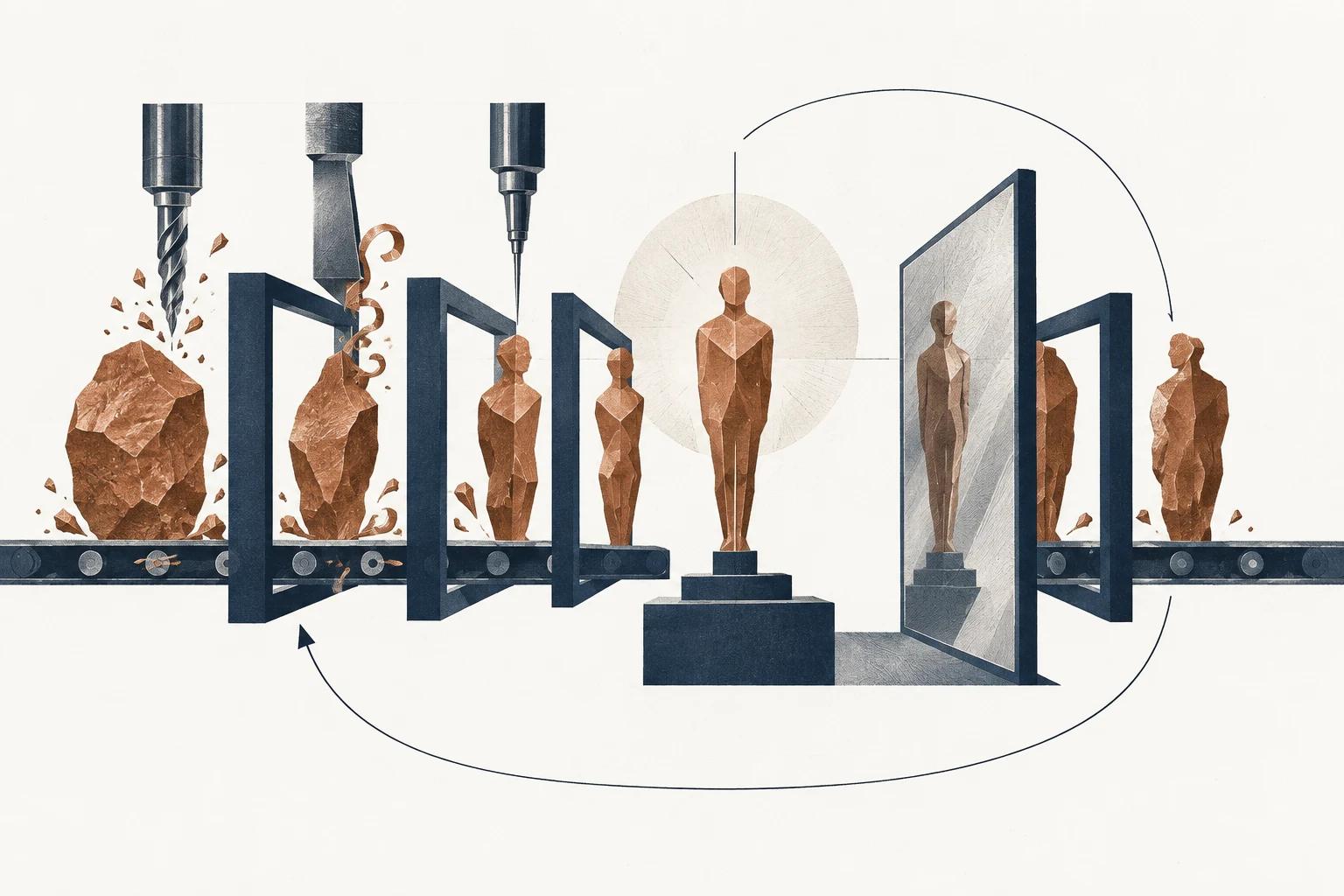
Never accept the first answer. Treat it as clay. Push it. Cut it. Ask for a shorter version, a sharper version, or a version that starts from the opposite assumption. The first answer is the floor, not the ceiling. Protect your voice. AI can make everyone sound polished, balanced, and slightly bland. That is not communication. That is wallpaper.
Verify when the stakes are real. AI hallucinates. It overgeneralizes. It presents inference as fact. In team settings, this is not a minor issue. It is a quality-control problem. The more AI accelerates individual contribution, the more essential human integration becomes.
And finally, keep responsibility where it belongs. AI drafted the email. You sent it. AI structured the memo. You own the recommendation. AI produced the argument. You carry the consequence. That is not a disclaimer. It is the entire point.
The more I use these tools, the less I see them as magic. They are not geniuses in a box. They do not understand consequence. They do not know what matters unless we tell them. But used well — with context, iteration, skepticism, and discipline — they compress the distance between thinking and doing in ways that genuinely matter. AI is not a shortcut around responsibility. It is a shortcut to the moment where responsibility becomes unavoidable.